
Hillside Construction
Hillside Construction & Geotechnical Engineering
Building on a slope requires more than just a builder; it requires a specialist in geotechnical engineering. Ancra provides advanced structural solutions for difficult terrains, ensuring your villa stands on solid ground.
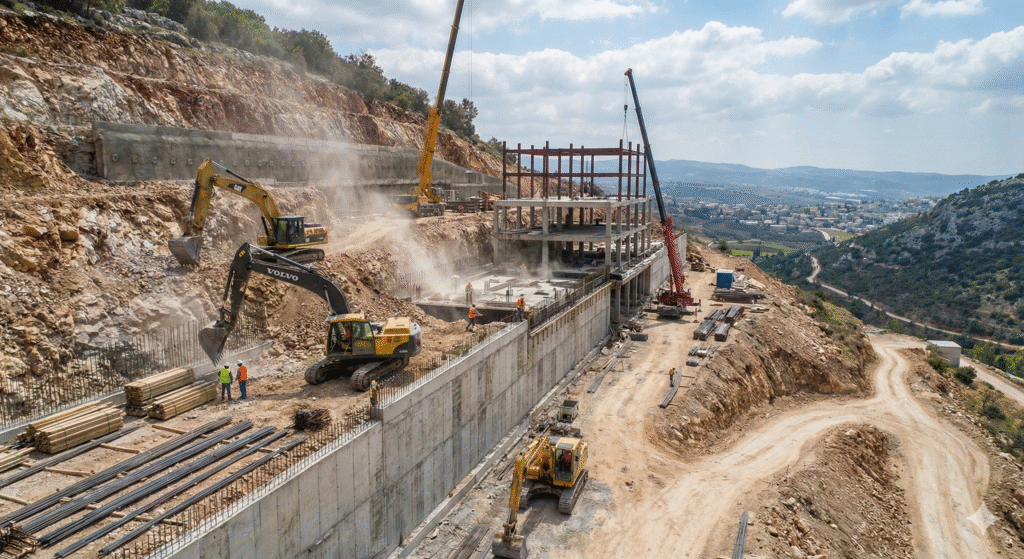
From Chaweng Noi to the peaks of Santiburi, we navigate Koh Samui’s strict “Zone 1, 2, and 3” regulations. We specialize in deep foundation piling, reinforced earth retention, and anti-erosion systems designed to withstand the heaviest monsoon rains.
Our Hillside Capabilities
We deliver heavy structural works tailored to gradients over 35 degrees:
- Retaining Wall Systems: Engineering and construction of Gravity walls, Cantilever walls, and Gabion baskets.
- Deep Foundation Piling: Micro-piling and bored piles to anchor structures into bedrock.
- Slope Stabilization: Soil nailing, shotcrete application, and advanced drainage grids to prevent landslides.
- Heavy Machinery Access: Logistics planning for getting cranes and concrete trucks to steep, high-altitude sites.
Why We Are Hillside Experts
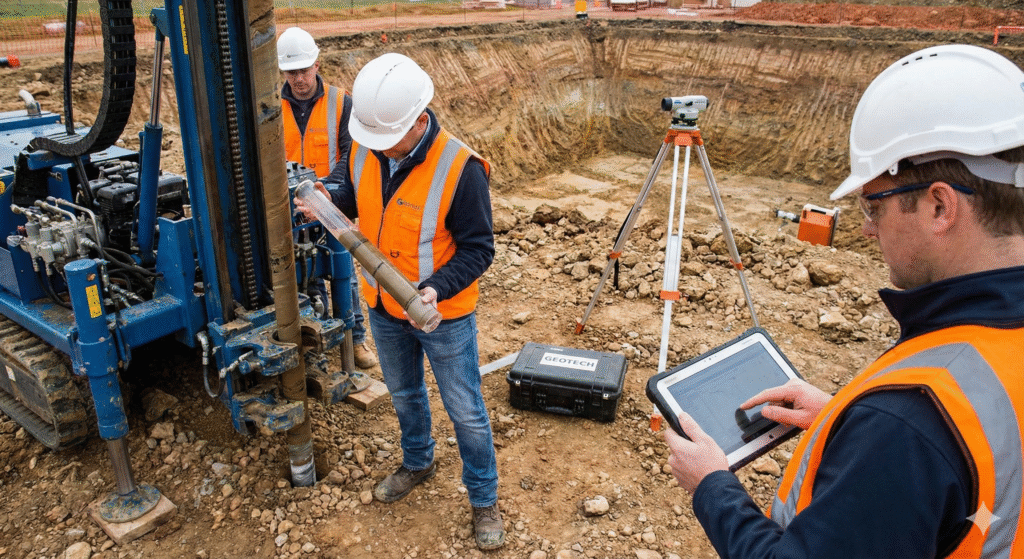
Ancra treats every hillside project as a civil engineering challenge first, and a luxury build second. We do not compromise on Safety Factors (SF). Our engineers calculate soil load-bearing capacities and shear strength before a single bag of cement is poured.
Regulations We Master
We ensure full compliance with Thailand’s Environmental Act for slopes:
- Zone 1 (Under 80m): Standard construction protocols.
- Zone 2 (80m – 140m): Strict height limits and green-space ratios.
- Slope > 35%: Specialized erosion control measures required.
- Slope > 50%: No-build zones (We help identify these risks early).
Hillside Construction Methodology
Our engineering approach to building on slopes:
Engineering Standards
Hillside Project Lifecycle
From raw jungle to structural completion, we manage the risks so you don’t have to.
Site Clearing & Survey
We clear vegetation and perform a topographical survey to map exact contour lines. This data dictates the height of the retaining walls needed.
Structural Engineering Calculation
Our licensed engineers calculate the dead loads and live loads to determine the diameter and depth of the piles required to support the villa.
Earth Retention Works
We build the “backbone” of the site. Massive concrete walls and drainage channels are installed to hold the slope in place permanently.
Main Construction
With the site secured, vertical construction begins. We use crane trucks and boom pumps to deliver concrete to hard-to-reach areas.
Slope Protection
The final step involves “shotcrete” or planting vetiver grass on exposed soil to prevent surface runoff and erosion during rain.
Technical FAQs
What is the maximum slope you can build on?
While we can engineering solutions for almost any gradient, slopes over 50% (26 degrees) are legally restricted in certain zones. We perform a site feasibility study to confirm buildability.
How do you prevent landslides?
We use a combination of deep piling (to pin the soil layers) and hydrostatic pressure relief (drainage pipes behind walls) to ensure water does not build up behind the concrete.
Do retaining walls cost a lot?
Yes, on steep land, retaining walls can account for 15-25% of the total construction budget. However, they are the most critical investment for the safety of your property.
Can you handle the “Zone 2” permit application?
Yes. Ancra manages the specific environmental impact submissions required for any construction above 80 meters sea level.
Building on a slope requires precision. Contact our engineering team for a site safety assessment and cost estimate.