Articles by: ancra2022@gmail.com

Koh Samui Construction Laws 2026

Koh Samui Construction Laws 2026

Koh Samui Construction Laws 2026

Koh Samui Construction Laws 2026

Compliance & Regulatory Guide

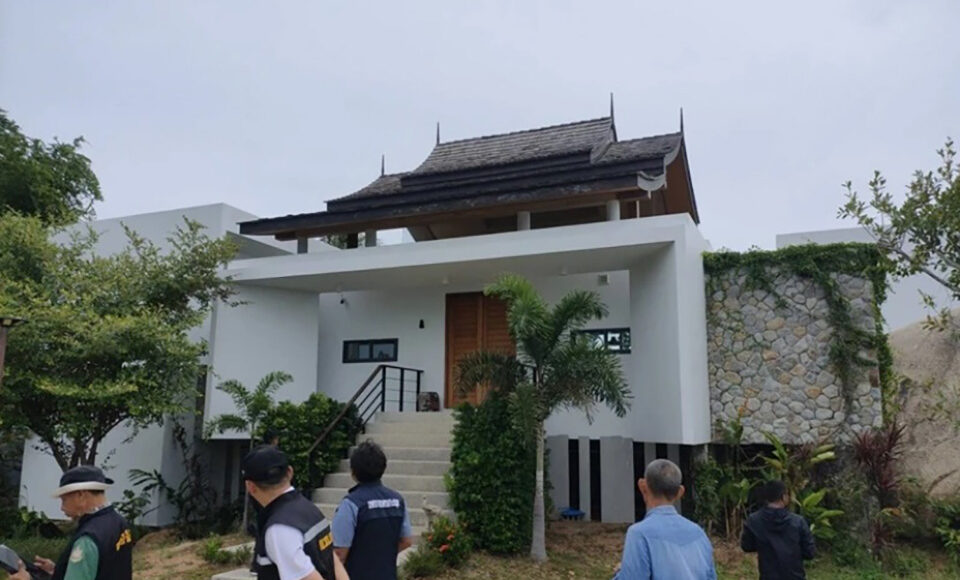
The Samui Model task force—a coalition of ISOC, Forestry Department, and local municipalities—has established systematic enforcement protocols for hillside construction. Aerial surveillance and GPS mapping technologies now monitor all development activity across the island.

98
Cases Under Investigation
21
Demolition Orders Issued
7,000
Companies Under DBD Review

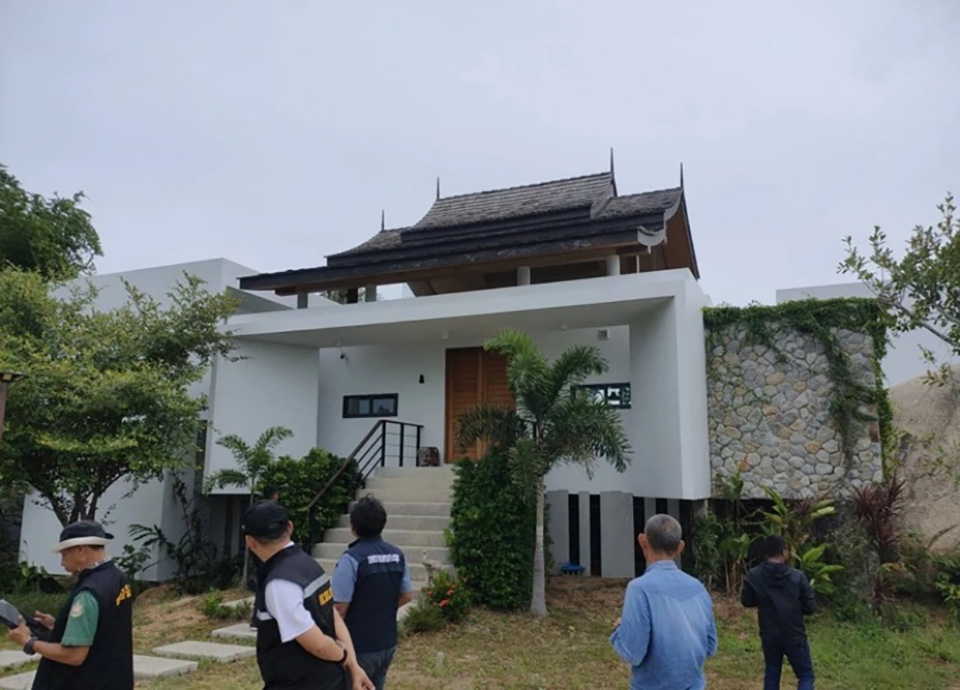
Koh Samui villa construction

Koh Samui Construction Laws 2026

LUXURY VILLA INVESTIGATION UNCOVERS 93 VIOLATIONS ON KOH SAMUI
Primary Enforcement Categories

The task force prioritizes three categories of violations. Understanding these classifications is essential for any development project.

01

Slope & Terrain Violations

Construction on gradients exceeding 50% is strictly prohibited. Projects on 35-50% slopes require single-home restrictions with defined footprint limits. Non-compliance results in demolition orders.

02

Height & Zoning Violations

Properties above 80m elevation face a strict 6m height restriction including roofline. Multi-level structures in zones designated for single-story dwellings constitute primary enforcement targets.

03

Ownership Structure Violations

The Department of Business Development is investigating 7,000+ Samui companies suspected of utilizing illegal nominee structures. Voided ownership invalidates all associated construction permits.

Zoning Classification Reference

Reference guide for land assessment prior to acquisition. Violations result in demolition orders without negotiation. For a complete technical breakdown of height limits, setbacks, and detailed zone maps, read our engineer’s guide on Koh Samui Building Regulations.

Classification: Prohibited
Construction is not permitted within 10 meters of the shoreline. No variance applications are accepted for this zone.

Classification: Restricted
Maximum height: 6 meters. Maximum building footprint: 75 square meters. Limited to single residential structures.

Classification: Restricted
Maximum height: 6 meters inclusive of roofline. Minimum 50% of land area must remain undeveloped. Environmental impact assessment mandatory.

Classification: Restricted
Single residence only. Engineering certification required. Cut-and-fill operations limited to 2 meters maximum.

Classification: Prohibited
All construction is strictly prohibited on slopes exceeding 50% gradient. Violations are subject to immediate demolition orders.

Enforcement Priority Index

Red Zone Violations
Hillside Zone (80m-140m)
Steep Terrain (35-50%)
Coastal Buffer Zone

Advisory: The task force utilizes aerial photography and GPS coordinate mapping. Properties previously considered concealed are now subject to systematic monitoring and enforcement protocols.

Our Compliance Methodology

Our BIM-integrated approach works within regulatory constraints rather than against them, maximizing development potential through computational analysis.

01

Title Verification

Chanote title analysis and contour mapping completed prior to design commencement.

02

Terrain Modelling

Computational design analysis using Grasshopper/Rhino to model terrain-responsive structures.

03

Height Validation

Stepped-terrace designs verified at every point against the 6m regulatory envelope.

04

Permit Submission

Direct Tesaban submission with BIM-generated documentation. No informal procedures.

Approach Comparison

Extensive cut-and-fill excavation to create level building platforms

Standardized rectangular footprints without terrain consideration

Multi-level designs frequently exceeding 6m height restrictions

Informal permitting processes creating compliance vulnerabilities

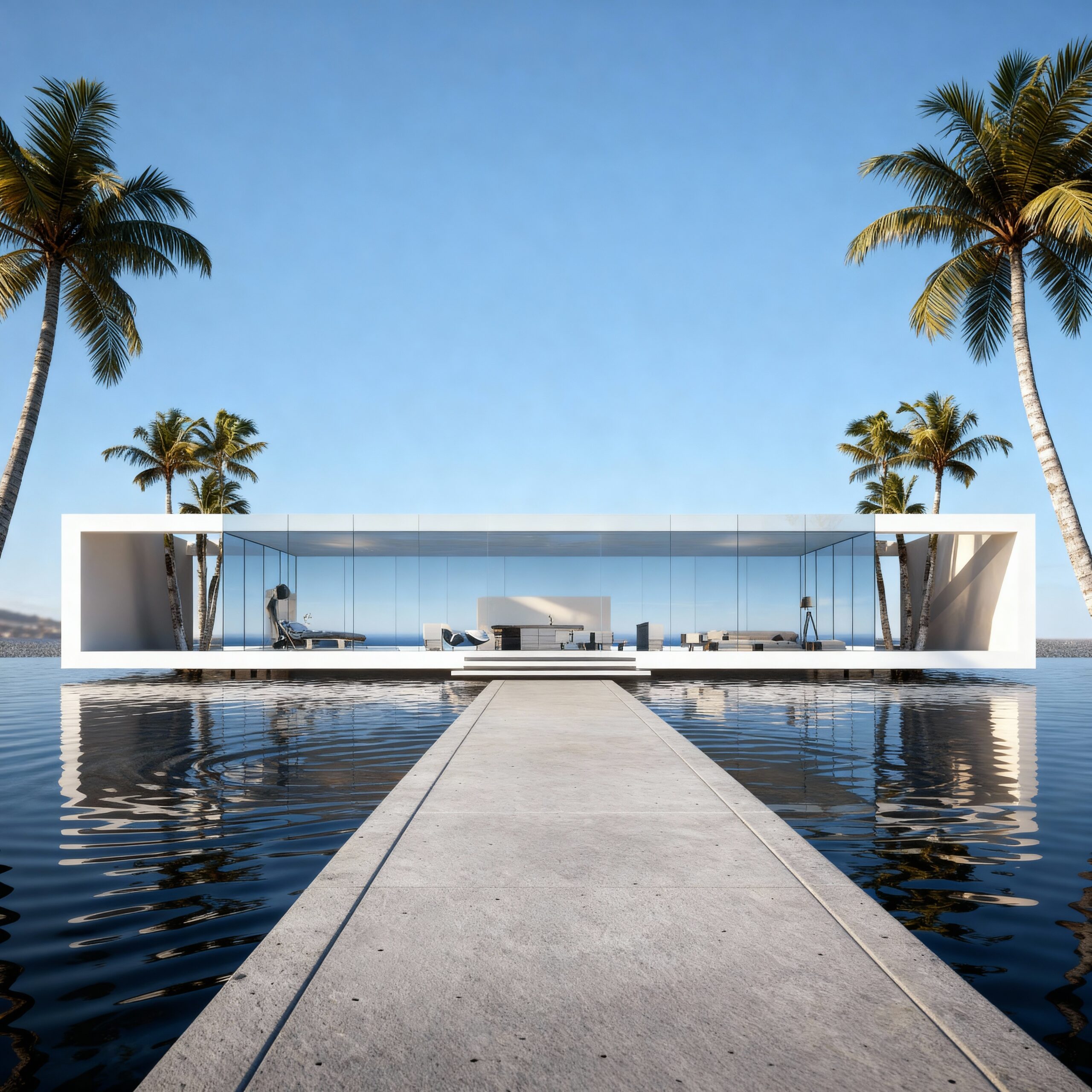
Conventional hillside construction
+ Terrain-responsive design following natural contours with minimal excavation

+ Parametric optimization maximizing buildable area within legal envelope

+ Point-by-point roofline verification against regulatory height limits

+ Formal permit channels with accurate BIM documentation

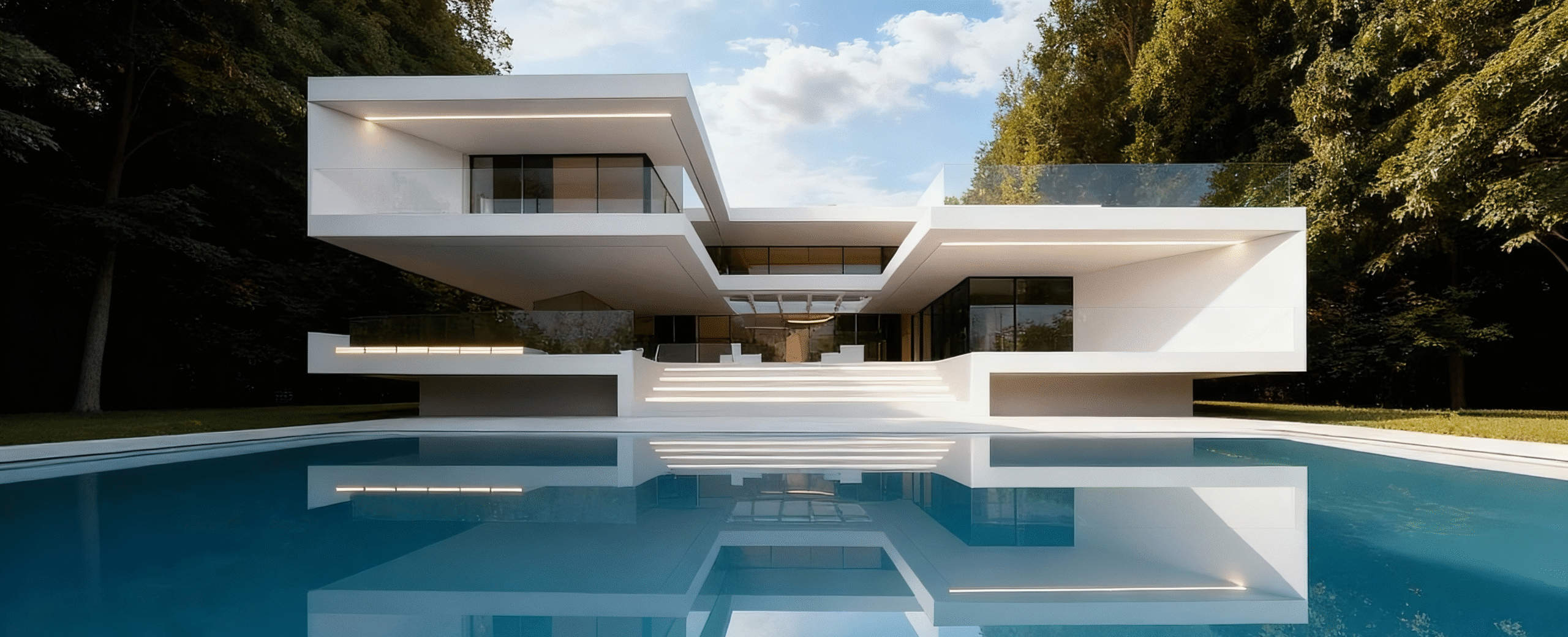
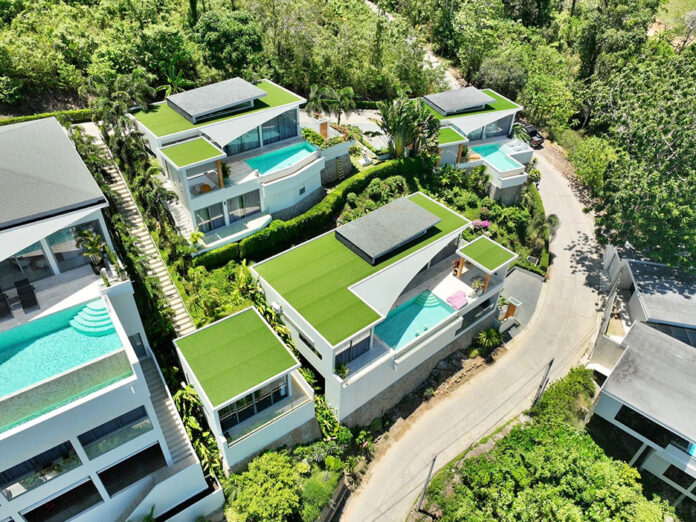
BIM-designed compliant villa
Project Reference

Bo Phut Hillside Residence

Site Conditions: 42% gradient terrain with panoramic ocean views. Conventional box design would have exceeded the 6m height limit and required prohibited cut-and-fill operations.

Design Solution: Three-level stepped-terrace residence with each level following natural contour lines. Roofline maintained under 6m at all measurement points. Total excavation volume reduced by 70% compared to conventional methodology.

Outcome: Full construction permit secured within 11 weeks through formal Tesaban procedures. Property now operates as licensed rental accommodation without compliance concerns.

Site Feasibility Assessment

Request a preliminary site and zoning audit. We provide a detailed assessment of what can be legally constructed before any capital commitment.

Frequently Asked Questions

The Samui Model is a coordinated enforcement initiative comprising the Internal Security Operations Command (ISOC), the Royal Forest Department, and local municipal authorities. Established in late 2024, it employs aerial photography and GPS coordinate mapping to systematically identify and investigate construction violations across Koh Samui.

Foreign nationals cannot hold direct land ownership in Thailand; however, building ownership is permitted. Established legal structures include leasehold arrangements (30-year terms with renewal provisions) and properly structured Thai company ownership. The Department of Business Development is currently investigating nominee arrangements, making proper legal structure essential. We recommend engagement with qualified Thai legal counsel prior to any land transaction.

Required documentation includes: Construction Permit (Ror. 4) from the local Tesaban, Environmental Impact Assessment for hillside developments, Chanote title verification, and Forestry Department clearance for elevated sites. Our team manages the complete permitting process using BIM-generated documentation that meets all regulatory requirements.

Compliant hillside construction in Koh Samui typically ranges from 25,000 to 45,000+ THB per square meter, varying by design complexity, site accessibility, and specification level. While this may exceed conventional flat-terrain costs, it provides protection against enforcement action and preserves asset value.

Standard permits with complete documentation: 8-14 weeks. Hillside developments requiring environmental assessment: 12-20 weeks. Our BIM-generated documentation significantly reduces revision cycles and accelerates approval timelines through accurate first-submission drawings.

Crackdown: Why Luxury Villas Are Being Demolished

Koh Samui Construction

About Ancra Engineering

Our DNA • Our Mission • Our Promise

ABOUT ANCRA: ENGINEERING FIRST, LUXURY ALWAYS

We are not just builders; we are engineers. Ancra was founded to bridge the gap between technical structural safety and high-end aesthetic finishing. As a premier construction company Koh Samui and Malaysia, we bring mainland professionalism to island development.

THE ANCRA STANDARD

The construction industry in Southeast Asia is polarized. On one side, you have local “cowboy” builders who are cheap but risky. On the other, you have international firms that are prohibitively expensive.

Ancra sits in the sweet spot.

We combine local logistics networks (to control costs) with Singaporean/Malaysian engineering standards (to control quality). We don’t guess about soil stability; we test it. We don’t hope for a straight wall; we laser-level it.

  • Safety: Zero-compromise on hillside structural integrity.
  • Speed: Critical Path scheduling to minimize vacancy.
  • Style: Access to premium import materials and finishing.
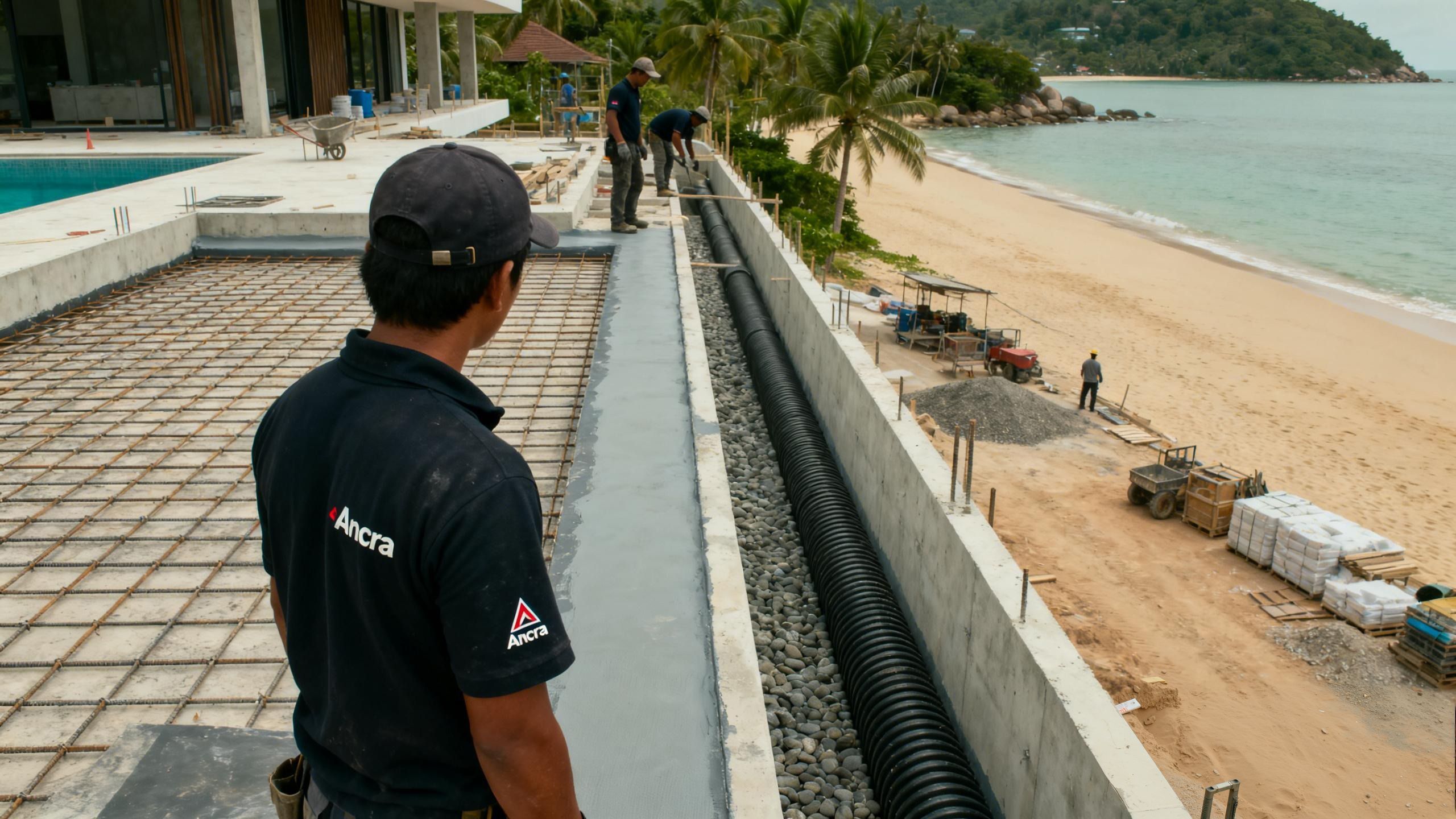
Koh Samui Construction Company (3)

WHERE WE OPERATE

Koh Samui

The Island HQ

Specializing in steep terrain villas, resort infrastructure, and luxury renovation. We navigate the unique logistics of island construction including ferries, water scarcity, and PLO zoning.

Kuala Lumpur

The Urban Hub

Focusing on high-yield condo fit-outs, Airbnb makeovers, and commercial office renovation. Speed and design flair are our priorities in the capital.

Johor Bahru

The Growth Zone

Serving the RTS link boom. We provide renovation and construction services for Singaporean investors entering the JB market.

WHY CHOOSE AN ENGINEERING FIRM?

We understand 'Hidden' Risks

Architects draw what looks good. Engineers build what stands up. We analyze soil shear strength, wind loads, and hydrostatic pressure to ensure your hillside villa doesn’t slide during the monsoon.

We speak 'Permit'

Navigating the Or Bor Tor (Thai Municipality) or Malaysian Bomba (Fire Dept) regulations is complex. We handle the paperwork, inspections, and compliance so you don’t face stop-work orders.

We value 'Asset Lifecycle'

We choose materials based on longevity, not just initial price. We know that cheap galvanized steel rusts in 2 years near the ocean, so we fight for stainless steel or marine-grade coatings to save you maintenance costs later.

BUILD WITH CONFIDENCE

Partner with the team that bridges technical safety and luxury design. Welcome to Ancra.

MEP Engineering Koh Samui

Koh Samui • Phuket • Technical Infrastructure

MEP ENGINEERING KOH SAMUI & LUXURY POOL CONSTRUCTION

The backbone of any luxury asset. As the leaders in MEP engineering Koh Samui, we engineer redundant, high-performance Mechanical, Electrical, and Hydraulic systems designed specifically to survive the harsh salinity and grid instability of the Thai islands.

WHY MEP ENGINEERING IN KOH SAMUI IS DIFFERENT

Building on the mainland is not the same as building on an island. The environmental stressors here—unstable voltage, high humidity, and corrosive salt air—destroy standard systems within 36 months. Expert MEP engineering Koh Samui requires a specialized approach to materials and load balancing.

Voltage Spikes

The Risk: The island grid fluctuates wildly. “Dirty power” burns out VRV aircon inverters and pool pumps prematurely.

The Ancra Solution: We install industrial-grade Automatic Voltage Regulators (AVR) and Phase Protection Relays at the main distribution board to cut power milliseconds before a surge causes damage.

Salt Corrosion

The Risk: Seaside villas are constantly bathed in salt mist. Standard outdoor AC units and galvanized fittings rust into powder in 2-3 years.

The Ancra Solution: We spec “Gold Fin” or epoxy-coated condenser coils, marine-grade 316L stainless steel for all outdoor fittings, and sacrificial anodes in water heaters.

Hard Water Scale

The Risk: Island groundwater is rich in limestone. Without treatment, scale blocks pipes, ruins rain showers, and turns pool water cloudy.

The Ancra Solution: Comprehensive pre-filtration. We install resin-based water softeners and commercial Reverse Osmosis (RO) units to ensure water is “hotel grade” before it enters the villa.

ELECTRICAL ENGINEERING & STABILITY

A luxury villa consumes massive amounts of power. Between multi-zone air conditioning, pool pumps, and kitchen appliances, the load is significant. Ancra designs electrical systems that are balanced, safe, and smart.

3-Phase Load Balancing

Most large villas require a 3-phase connection (PEA). If the electrical load isn’t balanced across all three phases, you trip breakers constantly and pay higher efficiency penalties. We perform detailed Load Calculation studies (Demand Factor) before pulling a single cable.

Generator & Backup Integration

We integrate sound-proofed diesel generators with Automatic Transfer Switches (ATS). When the grid fails (which it will), your villa switches to backup power in under 10 seconds, keeping essential services (lights, internet, water pumps, fridges) running seamlessly.

Smart Home Automation

We move beyond simple switches. We design centralized control systems (Lutron, KNX, or Control4) allowing owners to manage lighting scenes, curtains, and AC remotely—crucial for reducing energy costs when the villa is unoccupied.

HYDRAULIC & WATER MANAGEMENT

Securing Your Water Supply

During the Samui dry season, government water often stops. A self-sufficient villa is a valuable villa.

  • Deep Well Drilling: We manage the geological survey and drilling permits to access deep aquifers (often 100m+ depth).
  • Rainwater Harvesting: We design roof guttering systems that feed into large underground concrete catchment tanks, providing “free” water for landscaping and pool top-ups.
  • Buffer Tank Sizing: We calculate storage based on “max occupancy x 3 days” resilience, ensuring guests never run dry even during shortages.

Hotel-Grade Water Quality

Raw well water is often brown, iron-rich, or hard. We install multi-stage filtration:

  • Sand/Media Filters: To remove physical sediment and turbidity.
  • Carbon Filters: To remove odors and organic compounds.
  • Resin Softeners: Essential for removing calcium that destroys heaters and taps.
  • UV Sterilization: The final kill-switch for bacteria, ensuring tap water is safe for brushing teeth.

Eco-Responsible Waste Management

On hillsides, septic tanks are insufficient. We engineer Aerobic Wastewater Treatment Systems that use oxygen to break down waste faster and cleaner.

The resulting “grey water” is treated to a standard safe for subsurface irrigation, reducing your gardening water bill to zero while preventing groundwater contamination.

Constant Pressure, Every Floor

There is nothing worse than a luxury rain shower with low pressure. We use Inverter Pumps (VSD) that adjust motor speed based on demand.

Whether one tap is open or six showers are running simultaneously, the pressure remains constant at 3.0-4.0 bar, without the “water hammer” noise of traditional pumps.

LUXURY POOL CONSTRUCTION

The infinity pool is the visual anchor of any Samui villa. It is also the most technically complex structure. Ancra builds pools that are leak-proof, crystal clear, and structurally fearless.

1. Structural Integrity

Many infinity pools are cantilevered over steep slopes. We engineer the pool shell as a “double-reinforced” concrete vessel, tied into the main building’s piling system to prevent differential settlement that causes cracking.

2. The Waterproofing Standard

Tiles are not waterproofing. We apply a 3-layer flexible cementitious membrane (such as Laticrete or Sika) that can bridge hairline cracks. We water-test the shell for 7 days before a single tile is laid.

3. Aesthetic Finishing

We specialize in imported natural stones like Sukabumi (Bali Green), Silver Grey Quartzite, and large-format porcelain. We use epoxy grout to prevent algae staining in the joints.

POOL SYSTEMS COMPARISON

System Type Pros Cons Ancra Verdict
Traditional Chlorine (Tablets) Cheap installation. Harsh on skin/eyes. Strong smell. Needs constant manual dosing. Not Recommended for Luxury.
Saltwater Chlorination Soft water feel. Automated chlorine generation. No “chemical smell.” Salt cells require acid cleaning. Corrosive to cheap stainless steel. The Industry Standard. Recommended.
Magnesium Mineral (MagnaPool) Therapeutic “spa” quality water. Highest clarity. Very gentle. Higher OPEX cost for magnesium minerals. The Premium Choice.
UV / Ozone Hybrid Drastically reduces chemical use. Kills resistant bacteria. Expensive bulbs need annual replacement. Good add-on for high-traffic rental villas.

HVAC & CLIMATE CONTROL

Air conditioning in the tropics is about more than just temperature; it is about humidity control. If humidity remains above 60%, mold grows on expensive leather furniture and curtains within weeks.

VRV / VRF Systems

We use Variable Refrigerant Volume systems (Daikin/Mitsubishi) which allow one outdoor unit to run multiple indoor units. This preserves the architectural beauty of the villa exterior by reducing unsightly compressor boxes.

Fresh Air Exchange (ERV)

Modern villas are sealed tight for efficiency, which leads to stale, CO2-rich air. We install Energy Recovery Ventilators (ERV) that bring in fresh, filtered oxygen while expelling stale air, pre-cooling it to save energy.

Dehumidification Mode

Our control systems prioritize “Dry Mode” when the villa is vacant. This maintains the interior at 26°C but keeps relative humidity below 55%, protecting your art and soft furnishings from mold without high electricity bills.

EXTENDED FAQ

Why do my pool tiles keep popping off?

Tile delamination is a common failure in Samui. It is usually caused by: 1) Lack of expansion joints in the concrete shell, 2) Water seeping *behind* the waterproofing layer (negative pressure), or 3) Using standard indoor tile adhesive instead of C2S1 high-flexibility marine grade adhesive. Ancra solves this by engineering the shell correctly and using a strict latex-modified bonding protocol.

How do you handle voltage drops (Brownouts)?

Brownouts (low voltage) are more dangerous than blackouts. When voltage drops, motors (like in your AC or pool pump) draw more current (Amps) to compensate, causing them to overheat and burn out. We install Under-Voltage Relays that automatically cut power to sensitive equipment if the voltage drops below a safe threshold (e.g., 200V), saving your expensive appliances.

What is the difference between Skimmer and Overflow pools?

Skimmer pools have the water level about 10-15cm below the deck. They are cheaper to build as they don’t require a balance tank.
Overflow (Infinity) pools have water flush with the deck, spilling over one or more edges. This requires a separate “Balance Tank” (surge tank) underground to hold the displaced water. Overflow pools provide superior skimming and that iconic luxury “glassy” look, but cost roughly 20-30% more to construct.

Do I really need a sewage treatment plant?

If you are on a slope, yes. Standard septic tanks rely on “leach fields” (soil absorption) to disperse water. In clay-heavy or rocky Samui slopes, the soil cannot absorb the water, leading to foul smells and slope instability (soggy soil slides). An Aerobic Treatment Unit (ATU) actively cleans the water inside the tank, so the output is clear and odorless, safe to discharge into storm drains or use for irrigation.

Can you retrofit these systems into an existing villa?

Yes. This is a core part of our renovation service. We frequently upgrade plant rooms, installing new filtration racks, VSD pumps, and salt chlorinators to replace noisy, inefficient legacy equipment. We can also retrofit voltage stabilizers to existing main distribution boards.

ENGINEERING YOU CAN TRUST

Don’t let poor infrastructure devalue your asset. Partner with Ancra for MEP and pool systems that work.

UPDATED: DECEMBER 9, 2025 | CONTACT: ANCRA2022@GMAIL.COM
TAGS: MEP ENGINEERING KOH SAMUI, LUXURY SWIMMING POOL BUILDER THAILAND, VILLA ELECTRICAL DESIGN, INFINITY POOL STRUCTURE, PUMP ROOM ENGINEERING, VILLA WATER FILTRATION REVERSE OSMOSIS, VRV AIR CONDITIONING INSTALLERS THAILAND, SEWAGE TREATMENT PLANT FOR RESORTS, 3-PHASE ELECTRICITY LOAD BALANCING, SALT CHLORINATION POOL SYSTEMS